
One hour at the kitchen table. A gift they'll keep for years.
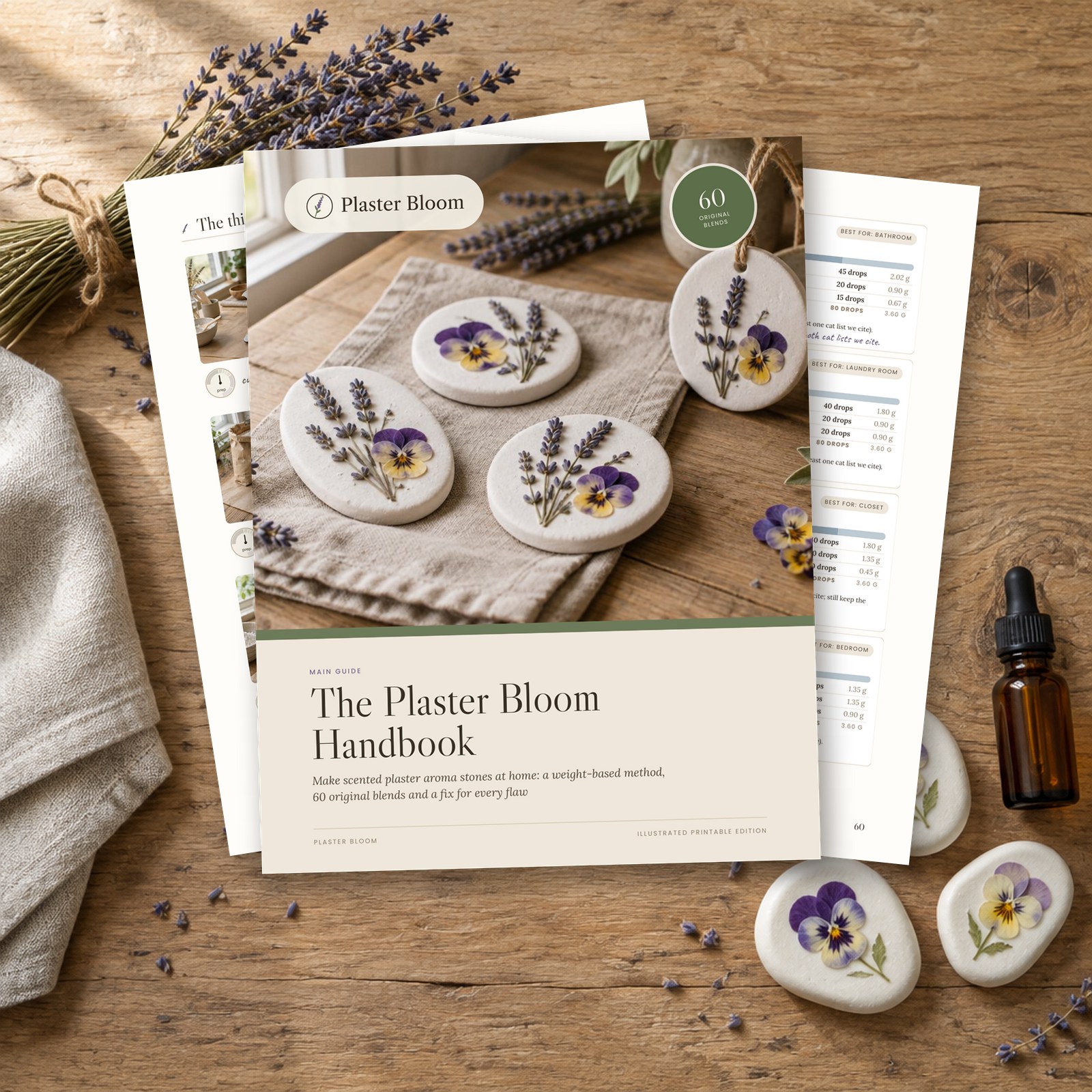
About an hour of hands-on work, a few days to dry, and you have pressed-flower aroma stones good enough to give. The Plaster Bloom Handbook gives you the grams and the minutes: a 13-step method, 60 original blends and a fix for 11 common flaws.
$37, one-time. Instant download. 14-day money-back guarantee.
- 95-page PDF, US Letter, print it or read it on a tablet
- 60 original blends in drops and grams for one 200 g batch
- Download to your phone, tablet or computer and keep the file
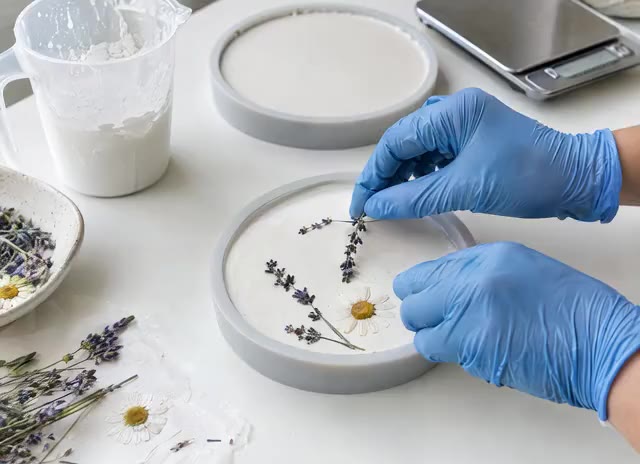
- A 13-step method, timed on the cure clock
- 60 original blends in 6 families of 10
- 11 troubleshooting symptoms, each with causes and a fix
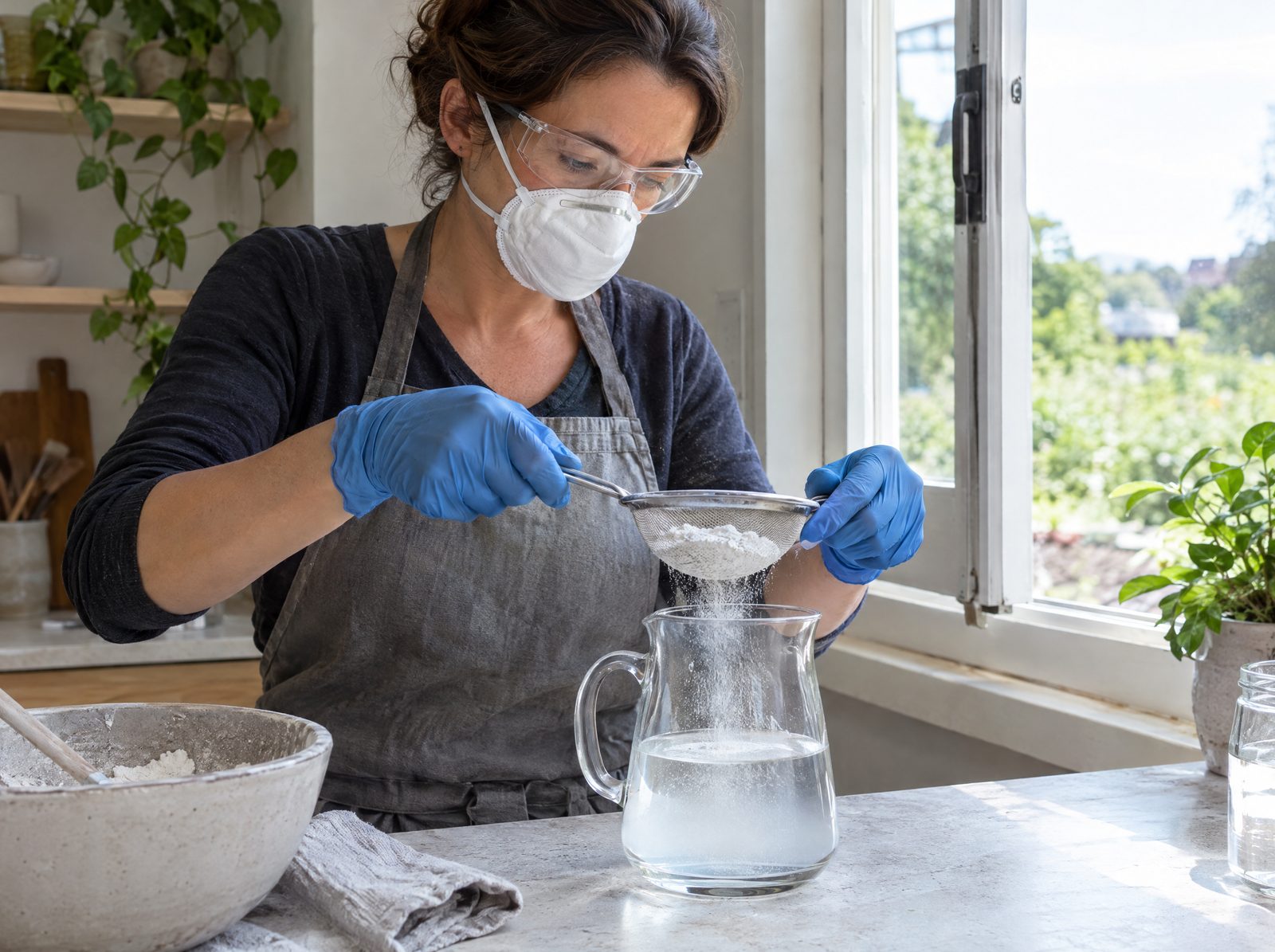
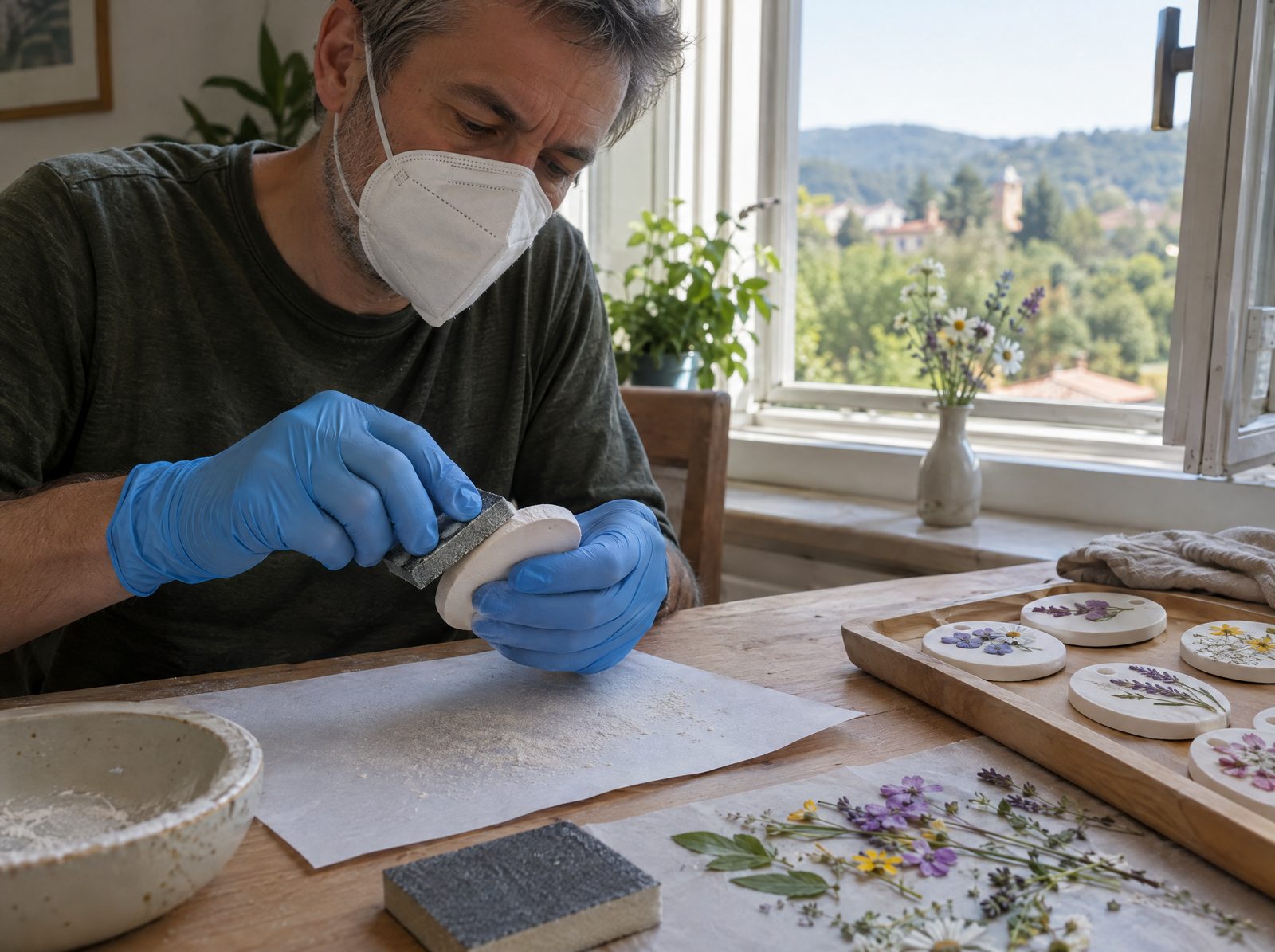
- Safety notes at every step, from dust to pets
Does any of this sound familiar from the last batch?
"Half my stones came out of the mold with a cracked edge."
"The face is chalky. White powder comes off on my fingers."
"The pressed flower sank and now it's a brown smudge under the surface."
"The recipe said 'add water until it looks right.' Right compared to what?"
"It smelled great for two days, then nothing."
"There's an oily ring on my dresser where the stone was sitting."
"I have a bottle of lavender oil and no idea how many drops one stone should get."
None of this means you're bad at crafts. It means most aroma stone recipes skip the parts that decide whether a stone works: how much water for how much plaster, by weight; the exact moment to set a flower; how long a stone needs to dry; and why fragrance goes on last. Free tutorials show the pretty pour and cut before the drying rack. The Plaster Bloom Handbook is about everything in between, written down in grams and minutes.
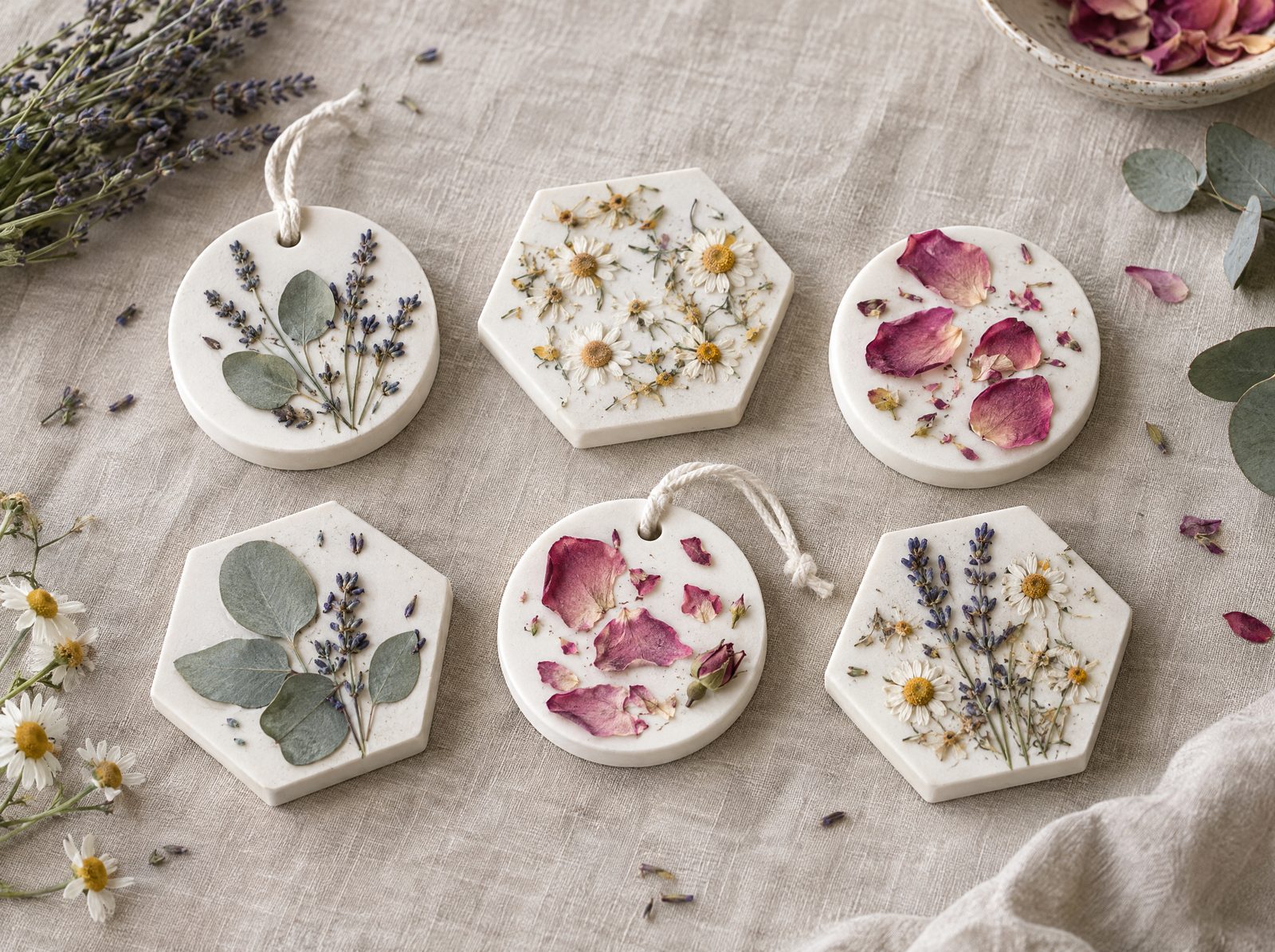
Gifts you made that look bought
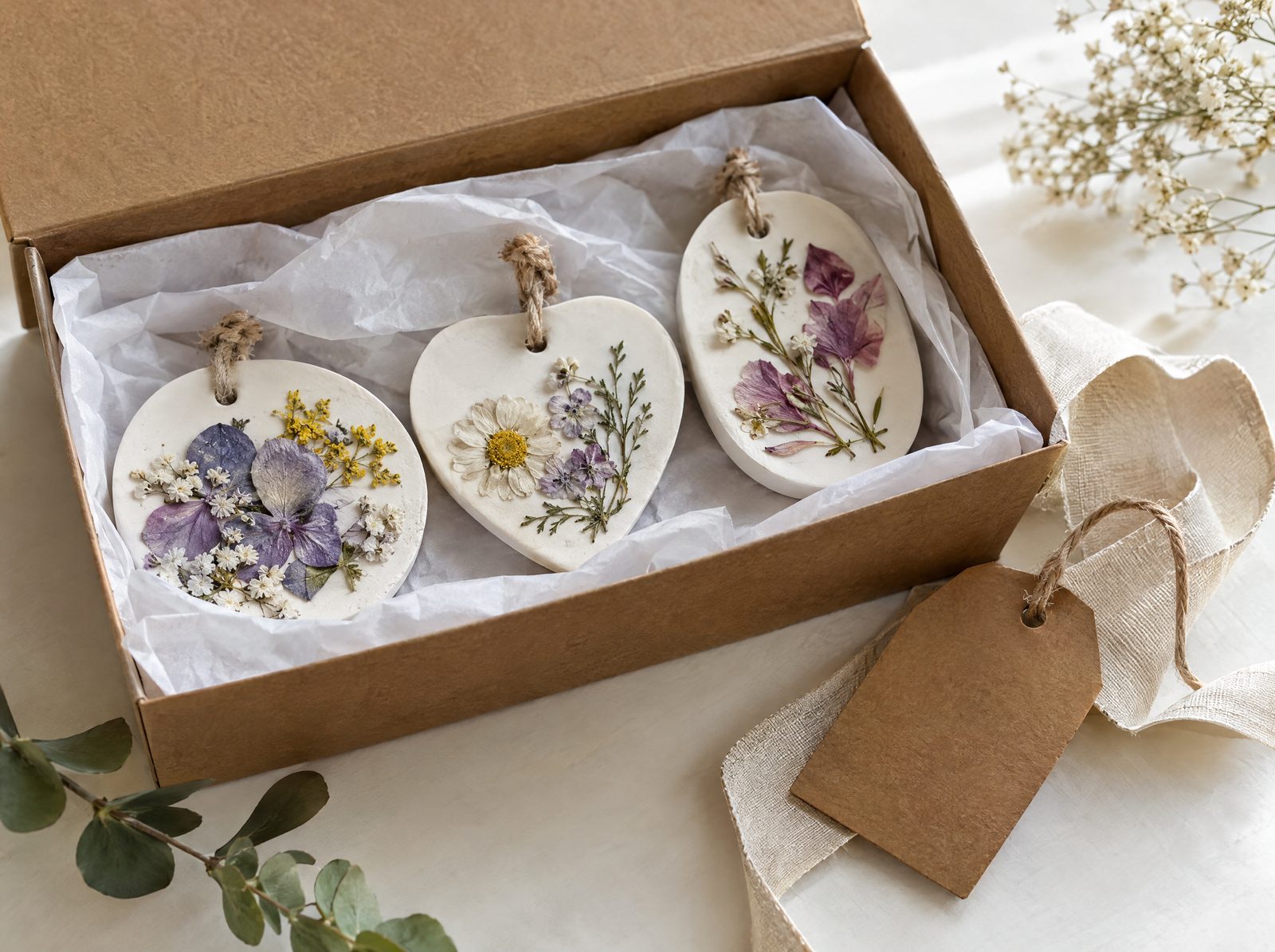
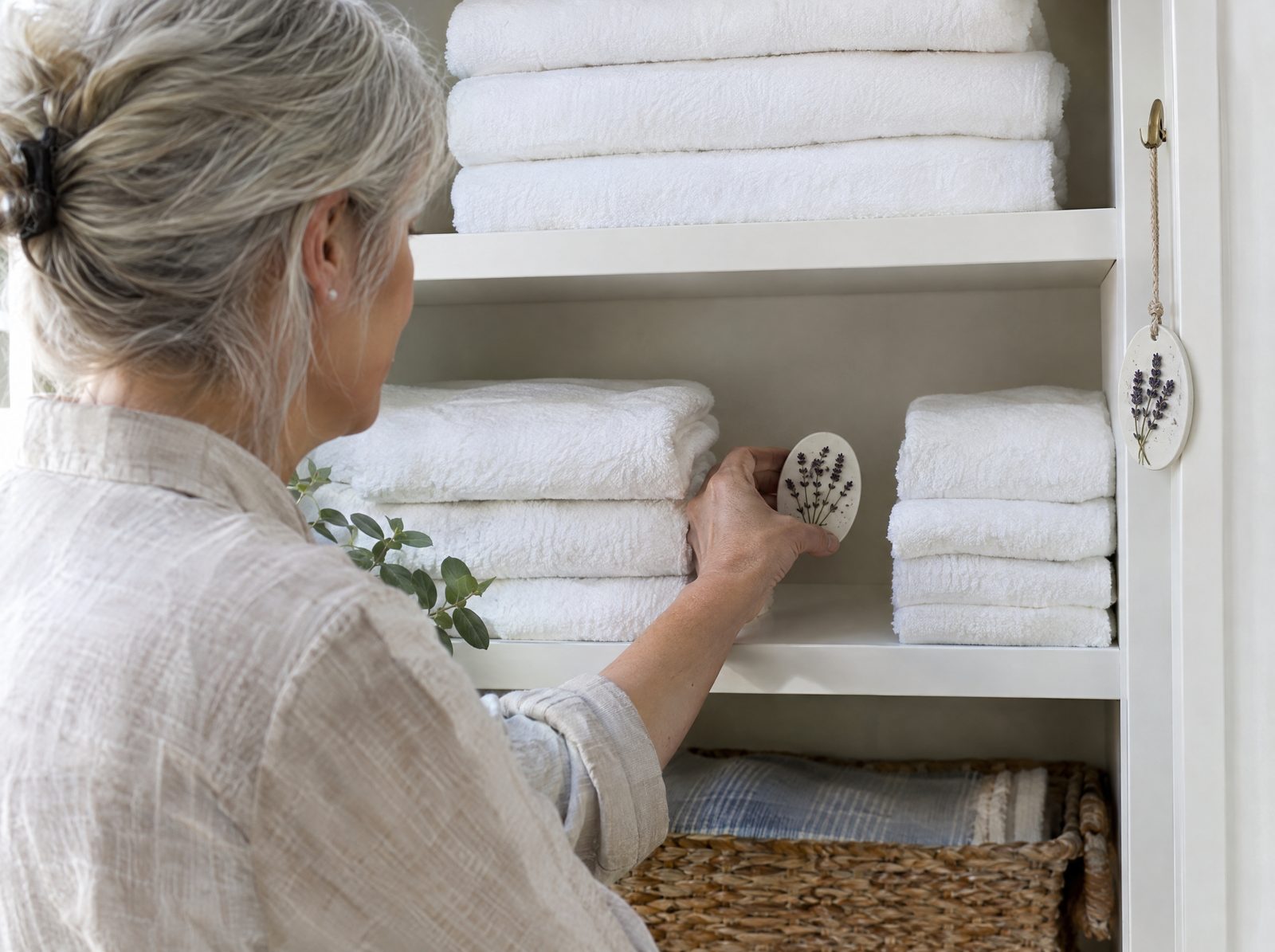
The handbook includes six piece designs: car hanging stones, closet and drawer stones, shelf stones, trinket dishes, a gift set of three and mini favor stones.
The Seasonal blend family and the gift and care card wording in Chapter 11 make them ready to wrap for the holidays.
Weigh it, time it, then scent it.
- 1
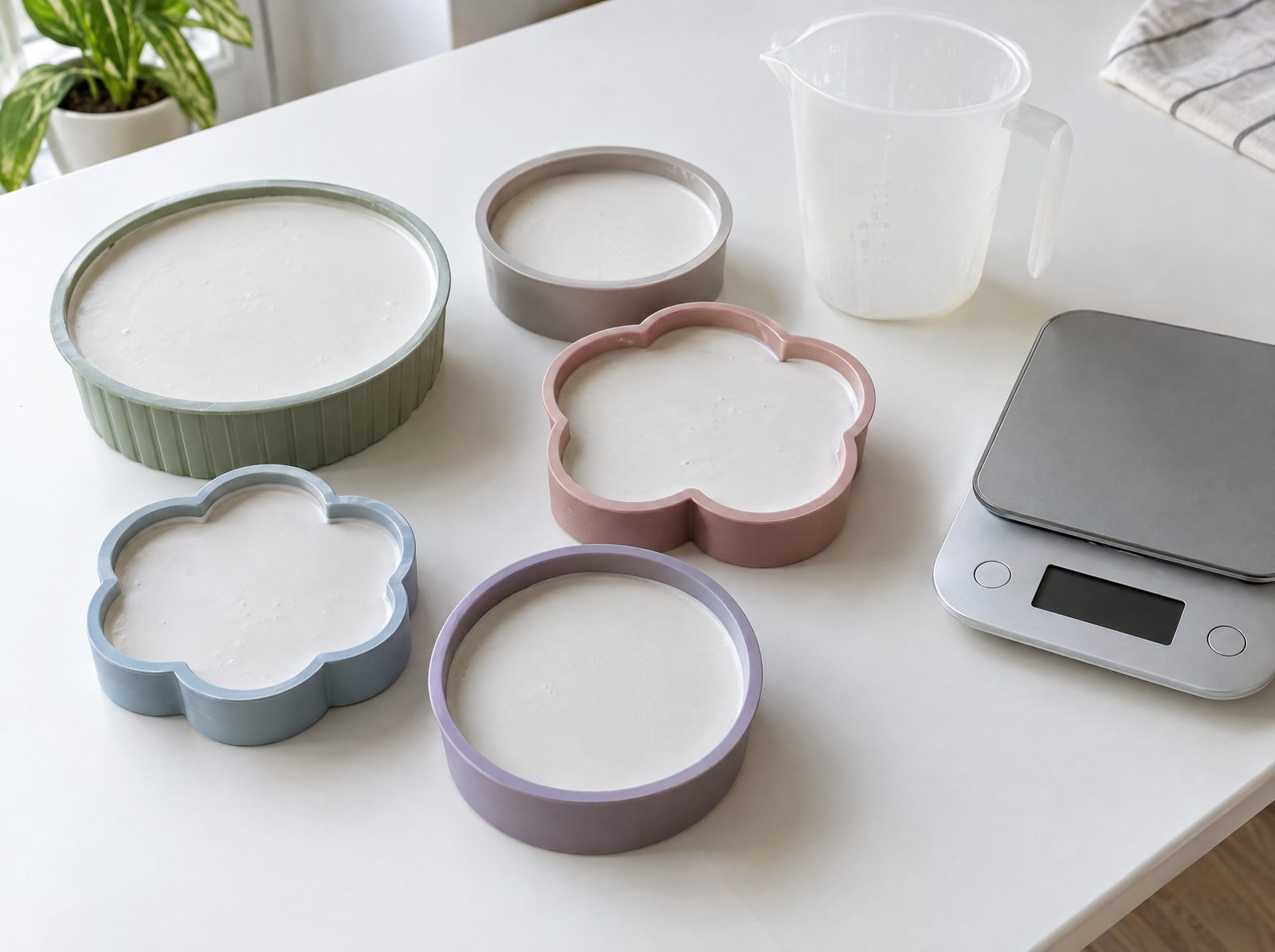
Weigh the plaster and the water. 200 g plaster, 140 g water, consistency 70.
- 2
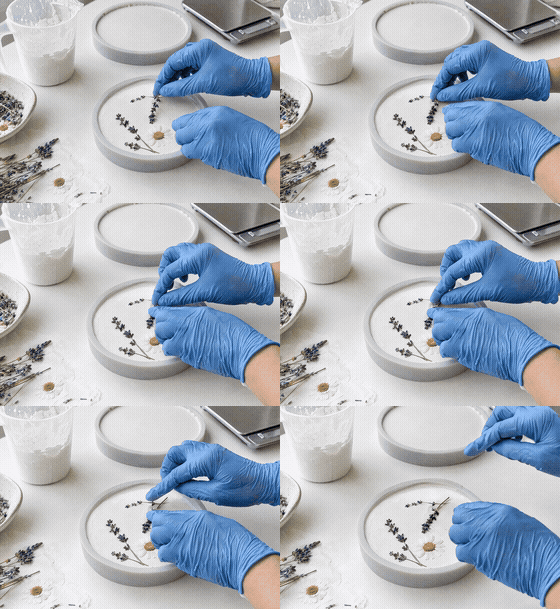
Watch the cure clock. Sift, slake, mix, pour, then set flowers at soft set when the shine leaves the surface.
- 3
Dry to a steady weight. Two weighings 24 hours apart that match.
- 4
Scent the dry stone. About 1 drop per 3 g, on the face, back sealed; never oil in wet plaster.
Most tutorials skip steps 3 and 4. That is why stones crack, chalk and lose their scent in two days.
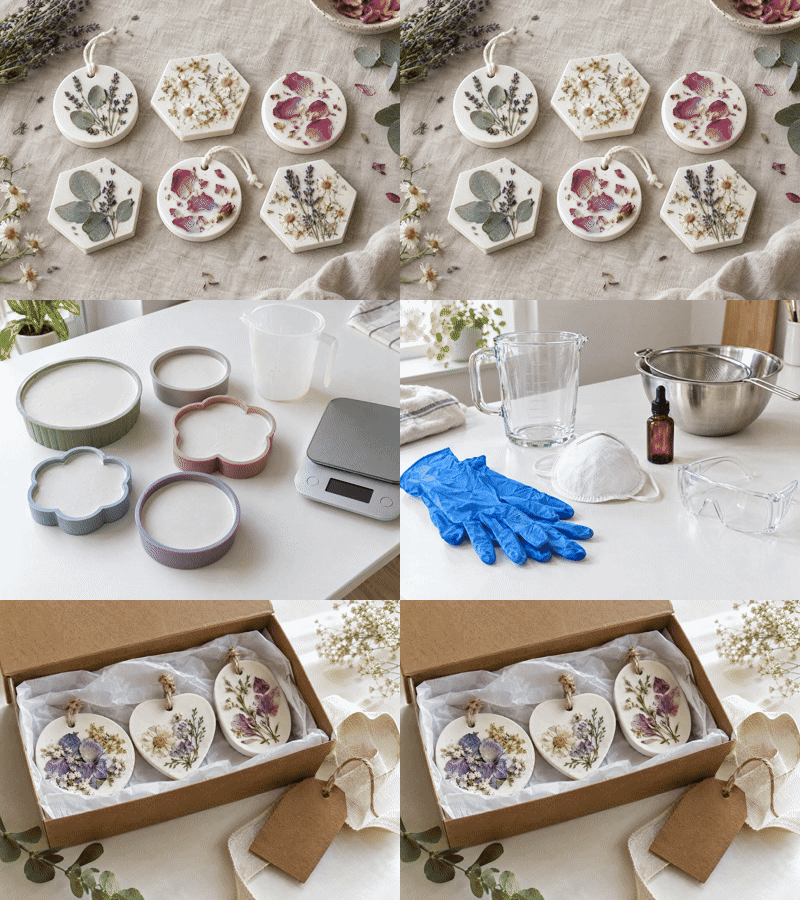
What's inside
95 illustrated pages, 12 chapters, 60 blend cards, a batch sheet and 3 checklists
every chapter, at a glance
- 1Before you start
- 2Materials explained
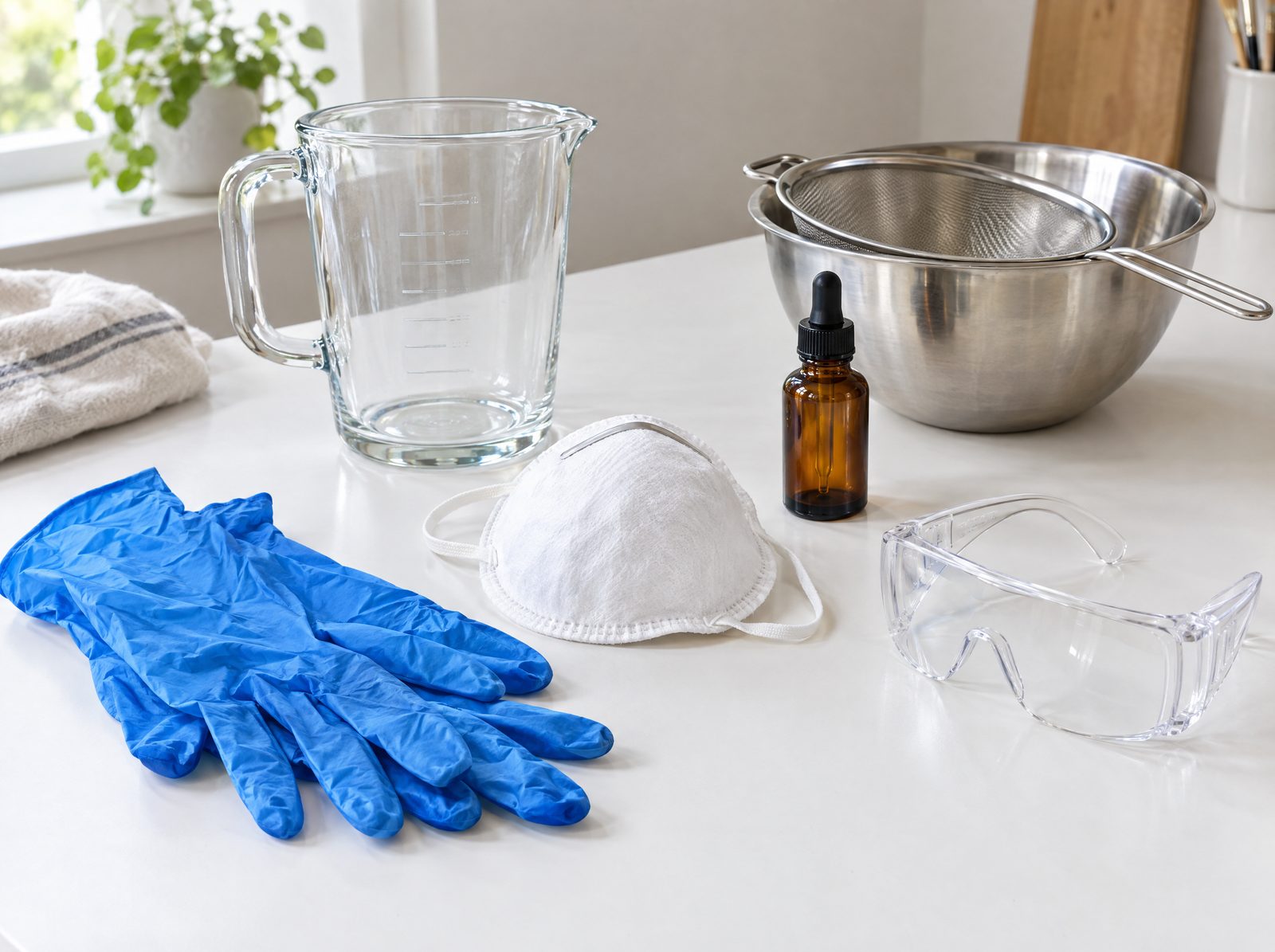
- 3Tools and safety gear
- 4The core method, step by step
- 5Ratios and batch math
- 6Botanicals and color
- 7Finishing
- 8Piece designs
- 9The 60 blends
- 10Troubleshooting by symptom
- 11Storage, gifting and labeling
- 12Quick reference
- Sources
Three ways to make a stone
| Starting from scratch | Free videos and scattered posts | The Plaster Bloom Handbook | |
|---|---|---|---|
| Plaster to water | Guessed by eye | Cups and "until it looks right" | By weight, from manufacturer data: 200 g plaster, 140 g water |
| When to set flowers | Trial and error | Often right after pouring | At soft set, when the shine goes off, with two placement methods |
| When a stone is dry | When it feels dry | Rarely covered | When two daily weighings match |
| How much fragrance | Unknown | A splash or "a few drops" | About 1 drop per 3 g of stone, with a table from 11 g to 100 g |
| Blends | Your own experiments | Lists without structure | 60 original blends in 6 families, in drops and grams |
| When something goes wrong | Start over | Comment sections | 11 symptoms with causes and fixes |
| Safety and sources | Up to you | Rarely listed | Safety notes at every step, 25 sources listed |
| When a batch fails | Start over and wait again | Ask in the comments | Look up the symptom in Chapter 10, change one thing |
This is for you if:
- You want to make scented plaster stones at home and get the same result batch after batch
- You'd rather work from grams and minutes than "add water until it looks right"
- You want a blend library that's organized by room and mood, with every oil in drops and grams
- You want to know why a stone cracked, chalked or lost its scent, and what to change next time
- You plan to give stones as gifts or favors and want care card and safety wording that fits home fragrance
This is not for you if:
- You want a supply kit shipped to you (this is a digital handbook; supplies are not included)
- You want blends described as relaxing, healing or good for sleep (the handbook makes no health claims)
- You're looking for a plan that promises sales or earnings
- You want a project for children to do on their own (adults handle plaster and oils; children and pets stay out of the room)
- You want to make hand or body casts in plaster (the handbook says never, because setting plaster can burn)
The Plaster Bloom Handbook
$37, one-time. Instant download to phone, tablet or computer.
Secure checkout by Shopify. Card and express payment options.
14-day money-back guarantee
Your purchase of The Plaster Bloom Handbook is covered by a 14-day money-back guarantee. Read it, pour a batch, and see if working by weight suits you. If it doesn't, email productadvice.info@gmail.com within 14 days with your order email. We'll refund the full amount to your original payment method.
How we made it
We built the handbook from published technical sources, not from guesswork. Water ratios, working times, drying temperatures and strength figures come from plaster manufacturers' technical data sheets and labels. Mixing and mold practice comes from ceramics teaching references and pottery suppliers. Safety guidance comes from NIOSH, OSHA's guidance on Safety Data Sheets, the FDA, the Consumer Product Safety Commission, HRSA Poison Help, the ASPCA and pet welfare organizations. All 25 sources are listed on pages 94 and 95, so you can check any number yourself.
Where published numbers differ, for example how long a stone takes to dry, the handbook shows the range and gives you a way to measure your own: your scale.
The 60 blends are our own original formulas, computed to one consistent load of about 1.5 percent oil in the dry stone. We say plainly that they are computed, not lab-tested perfumes: they are starting points for your own nose, and the blend log is there for your changes.
Before release, the figures were checked against their cited sources and the batch math was recalculated.
Safety note
FAQ
Weigh it once. Write it down. Make it again.
$37, one-time. Instant download.